Business Name: BeeHive Homes of Plainview
Address: 1435 Lometa Dr, Plainview, TX 79072
Phone: (806) 452-5883
BeeHive Homes of Plainview
Beehive Homes of Plainview assisted living care is ideal for those who value their independence but require help with some of the activities of daily living. Residents enjoy 24-hour support, private bedrooms with baths, medication monitoring, home-cooked meals, housekeeping and laundry services, social activities and outings, and daily physical and mental exercise opportunities. Beehive Homes memory care services accommodates the growing number of seniors affected by memory loss and dementia. Beehive Homes offers respite (short-term) care for your loved one should the need arise. Whether help is needed after a surgery or illness, for vacation coverage, or just a break from the routine, respite care provides you peace of mind for any length of stay.
1435 Lometa Dr, Plainview, TX 79072
Business Hours
Monday thru Sunday: 9:00am to 5:00pm
Facebook: https://www.facebook.com/BeeHivePV
YouTube: https://www.youtube.com/@WelcomeHomeBeeHiveHomes
Families typically senior care near me do not come to the concern of care in a neat, organized way. More frequently, they arrive after a couple of harsh nights, a missed drug, a kitchen fire that never fairly took place however quickly can have, or the moment a loved one stray from home and returns scared and overwhelmed. Already, the problem is no more abstract. It is individual, immediate, and a little overwhelming.
That is where the selection in between respite care and long-lasting memory care begins to matter. Both can be the appropriate response, but they fix different problems. Respite care uses a break, a bridge, or a short-term safeguard. Lasting memory care is an extra irreversible setting built for people whose requirements have outgrown what household, next-door neighbors, or a common senior living setting can safely provide.
The tough part is that these alternatives can look comparable at a look. Both might involve trained staff, medication support, aid with daily routines, and a safe and secure atmosphere. But the objectives are different, and those objectives ought to drive the decision.
The actual question is not which alternative seems better, but what issue needs solving
When families call asking about memory care near me, they are usually truly asking, "Just how much assistance suffices, and how much is too much?" That is the best concern. A person coping with dementia, Alzheimer's disease, or an additional cognitive problem might have days where they appear rather capable, then all of a sudden come to be dangerous, distressed, or incapable to deal with basic jobs. The care strategy has to represent the most awful days, not simply the great ones.
Respite care is typically temporary senior care, often used for a couple of days, a number of weeks, or sometimes much longer relying on the community and the circumstance. It offers the key caretaker a chance to remainder, traveling, recover from health problem, or take care of an emergency situation. It can likewise act as a trial period, letting households see just how a loved one reacts to a structured setting without making a long-term action right away.
Long-term memory care, by contrast, is made for recurring support. It ends up being the online when safety, guidance, and consistency are no more optional. For some family members, the change comes after years of taking care of in your home. For others, it occurs quicker after a medical diagnosis or a situation. Regardless, it is not merely regarding placement. It is about whether a person's every day life can be handled sensibly and with dignity.
When respite care makes sense
Respite care can be a functional, humane alternative when the main caretaker is worn down or momentarily unavailable. That alone is factor sufficient. Caregiving fatigue is actual, and it frequently builds silently. A partner might start missing dishes, sleeping poorly, or sensation nervous every time the phone rings. A grown-up youngster might be juggling work, kids, and elder care, after that realize they have not had a complete evening of rest in weeks.
A short stay in respite care can assist in a number of ways. It allows the caretaker to tip away without abandoning the person that requires assistance. It offers the care recipient a possibility to be in a supervised setting with help nearby. It can additionally disclose details that are easy to miss at home, such as whether the individual needs extra hands-on support than the family idea, or whether they come to be dizzy in unknown surroundings.
There are functional reasons too. In some cases a household is waiting on a home alteration, such as a ramp, order bars, or a more secure shower room setup. Often a caregiver has actually surgical treatment set up. Sometimes there is a funeral service, a wedding celebration, or an essential out-of-town responsibility. Respite care can cover those gaps without compeling a permanent decision before the household is ready.
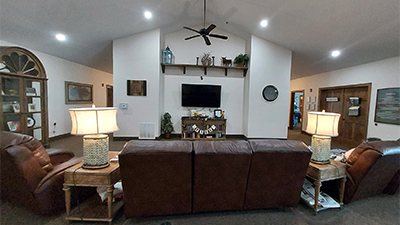
For some individuals, a respite stay ends up being the very first sincere test of just how much structure they require. A loved one that seems calm at home might end up being agitated when the day-to-day regular adjustments. One more individual may do remarkably well, eating much better, resting more constantly, and engaging with team in means the family had not seen in months. Both outcomes work. They tell you something real.
When long-term memory care becomes the safer choice
Long-term memory care is normally the much better fit when cognitive decrease is no longer periodic or moderate, however consistent and escalating. The indicators are not constantly dramatic. Often the shift turns up in small yet distressing patterns, like duplicated drug errors, leaving burners on, hiding things and forgetting them, or thinking unfamiliar people are member of the family. Other times the adjustments are much more obvious, such as aggressiveness, nighttime straying, or a failure to identify acquainted places.
A person may require memory care when supervision has become a full time job and home can no longer supply sufficient defense. This is specifically true if the individual has currently roamed, fallen, gotten shed, or been made use of financially. It can also end up being needed when a spouse or relative is literally unable to provide the level of lifting, cueing, and checking required.

Good memory care is not just about a locked door. It is about a setup designed for the facts of dementia. That usually indicates staff educated to reroute confusion without escalating it, routines that minimize anxiousness, visual hints that make areas less complicated to browse, and activities that match cognitive abilities rather than sequential age alone. The best neighborhoods comprehend that people with amnesia still need function, discussion, and respect.
Families looking for senior living near me typically discover that not every area identified as senior living is geared up for this degree of assistance. Assisted living might help a person with light forgetfulness, however if the individual is continuously risky, the extra specialized structure of memory care is usually the smarter choice.
Signs the choice is shifting from short-term assistance to recurring care
There is a factor where respite care stops sufficing, not since it failed, however because the requirements have actually transformed. Family members typically know something is incorrect before they can completely call it. The individual may stand up to showering, neglect dishes, repeat the exact same inquiry every few mins, or accuse caretakers of swiping because they can not track where things are put. One harsh week does not mean memory care is needed. A pattern over months often does.
A couple of signs are entitled to very close attention. If a loved one can no more take care of standard hygiene without prompting, if they are avoiding medicines or doubling doses, if they are coming to be hazardous to lay off, or if they are becoming a lot more anxious and perturbed each evening, the balance may be tipping towards lasting memory care. An additional crucial pen is caregiver stress. A strategy that just functions since a single person is constantly on alert might not be sustainable.
It is also worth taking note of social withdrawal. Some individuals with amnesia begin avoiding conversation since they are shamed by what they do not bear in mind. Others quit taking part in pastimes, quit going outside, or seem to shrink away from the globe. In a strong memory care setup, staff can reestablish basic regimens and gentle involvement in a manner that family members, broken by everyday anxiety, commonly can not sustain alone.
The emotional difference families feel
The useful distinctions in between respite care and memory care are very easy to explain. The emotional distinctions are harder.
Respite care often lugs a feeling of momentary relief combined with shame. Many caregivers feel they must have the ability to do every little thing themselves. They fret that a short remain means they are falling short. In reality, the opposite is usually true. Utilizing respite care can be an act of accountable preparation, not give up. A weary caretaker is more likely to make errors, lose patience, or wear out totally. A few days away can restore steadiness.
Long-term memory care brings a various type of grief. Even when the decision is plainly the best one, families usually grieve the loss of the old routines. The cooking area table conversation changes. Your house really feels quieter. The connection changes from handling with each other in the house to seeing, advocating, and staying linked in new means. That despair is normal. It does not mean the choice was wrong.
Many households go through a duration where they feel both alleviation and sadness at the same time. That mix is common. A partner may rest via the evening for the first time in a year and still cry the following mid-day. A grown-up youngster might really feel deeply grateful that experienced personnel are taking care of the daily, then really feel pains of regret when they repel after a visit. These responses are not oppositions. They belong to elder care when memory loss changes the form of a family.
What the daily difference can look like
If you have never seen a well-run memory care neighborhood, it can be difficult to picture how the routine differs from a brief respite keep. In respite care, an individual may settle into an acquainted schedule for a quick period, obtain help with meals, drug, clothing, and supervision, after that return home. The emphasis is on security and support without asking them to completely adjust to a new long-lasting identity.
In long-lasting memory care, the environment is constructed for duplicated patterns. Team find out a resident's behaviors, fears, preferred foods, and ideal times of day. Somebody that becomes anxious before supper may require a quieter change. An additional individual might walk extra comfortably after lunch and benefit from guided activity after that. These details matter due to the fact that memory loss usually makes people really feel dangerous also when absolutely nothing is visibly wrong. Routine can lower that stress.
A resident with modest dementia might require suggestions for every component of the day, from brushing teeth to changing clothing. The community does not expect them to take care of separately. Instead, it produces sufficient framework that success comes to be feasible. That is a really different type of senior care from a momentary remain, even if both use similar services on paper.
How to consider cost without shedding the bigger picture
Cost issues, and family members must speak truthfully regarding it. Respite care is often priced every day or week, and long-term memory care is normally structured as a month-to-month expenditure. The numbers can really feel high, specifically if the family members had wanted to maintain things in your home much longer. It is tempting to contrast only the invoice and quit there.
That comparison can be misleading. Home care, internal assistants, missed out on work, transport, medication mistakes, drop threat, and the stress on family members connections all have costs also, also when they do not show up in a single bill. Often respite care is one of the most reliable way to buy time and stay clear of a rushed choice. Sometimes long-lasting memory care, while extra expensive than hoped, really stops repeated emergency situations and surprise expenses.
The finest technique is to look at the whole photo. What degree of supervision is truly needed? Can the home setting be ensured sufficient without exhausting everyone entailed? If the response is no, then the concern comes to be less about whether memory care is budget-friendly in the abstract and much more regarding whether the existing plan is currently costing excessive in tension and risk.
A straightforward way to contrast both options
If you are attempting to decide between both, it assists to compare them in simple language instead of marketing language. Respite care is normally short-term, adaptable, and designed to sustain a caretaker break or a momentary need. Long-term memory care is structured, regular, and intended for ongoing cognitive decline that needs everyday supervision.
Here is a short sensible check, particularly if you are researching memory care near me or checking out senior living near me areas:
- Choose respite care if you need a temporary safety net, caregiver relief, or time to plan. Choose long-term memory care if safety, guidance, and daily cueing are required every day. Choose respite care if you wish to examine how your loved one performs in a structured setting. Choose memory care if roaming, medicine mistakes, or confusion in your home are coming to be frequent. Choose either one with a clear prepare for what takes place after the stay ends.
That last factor is usually overlooked. A respite remain must not finish in a haze of uncertainty. Families ought to make use of the time to reassess what is working, what is not, and whether the next step is extra assistance in the house or a much more permanent move.
Questions worth asking prior to you decide
The ideal decisions usually originate from useful questions, not hopeful reasoning. Before picking a respite stay or a lasting placement, ask on your own a couple of honest points: Can my loved one securely spend a full day without close guidance? Am I genuinely able to keep this up for one more six months? Is the individual extra unclear at home, or more unclear when routines alter? Have we currently reached the point where one mistake could cause major harm?
These concerns do not need to be addressed completely. They simply require to be responded to honestly. Households often delay also long because they really hope one more month of taking care of at home will make points much easier. In some cases it does. Frequently, it just means one more month of stress.
This is where seeing communities, chatting with personnel, and seeing the rhythm of daily life can assist. The best elder care setup ought to not really feel mysterious. It needs to feel understandable. If you stroll right into a memory care community and notice calm, patient redirection, noticeable regimens, and citizens that seem involved instead of disregarded, that tells you something. If you are checking out respite care, ask just how drug is dealt with, just how personal regimens are preserved, and what occurs if your loved one ends up being confused or upset. Those information matter greater than refined brochures.
Choosing based upon timing, not simply diagnosis
A diagnosis is very important, however timing matters equally as much. Two individuals with the very same diagnosis can need very different degrees of support. One might still live securely at home with a couple of hours of help per week. One more may need memory care currently since they are already missing out on meals, leaving your home in the evening, or becoming distressed when left alone.
That is why households should not choose based just on tags. They should choose based upon everyday reality. If a person with dementia still acknowledges their home, follows regimens, and can approve assist with marginal resistance, respite care may be enough for the minute. If the same person no more knows where they are, can not handle drugs, and needs supervision throughout the day, lasting memory care is likely the much safer and a lot more compassionate path.
The right response can also transform over time. A family members may start with respite care after a medical facility remain, after that realize the person requires much more continuous support. An additional family could relocate a loved one into memory care, just to discover that a short respite keep sufficed to recuperate stamina after a situation. The care plan ought to be adaptable enough to reply to what is actually taking place, not just what was expected.
The selection that shields both the individual and the caregiver
The most thoughtful decisions normally shield two people simultaneously, the person living with amnesia and the caretaker carrying the weight of duty. Respite care can give a family members the breathing space to maintain going. Lasting memory care can offer an individual with dementia the framework and safety they require when home is no more enough.
Neither option means love went out. If anything, both are indications that someone took the scenario seriously enough to match like need. That is what good senior care looks like. It is not always classy. It is often exhausting, emotional, and loaded with concession. Yet when it is succeeded, it provides people a better chance at safety, convenience, and dignity.
For families standing at this crossroads, the most effective next step is often simple: look closely at what is occurring day to day, visit communities that understand memory care, and ask whether a short-term bridge or an irreversible setting will really serve the person in front of you. The response is not always obvious theoretically. It becomes clearer when you stop asking what sounds manageable and start asking what is absolutely sustainable.
BeeHive Homes of Plainview provides assisted living care
BeeHive Homes of Plainview provides memory care services
BeeHive Homes of Plainview provides respite care services
BeeHive Homes of Plainview supports assistance with bathing and grooming
BeeHive Homes of Plainview offers private bedrooms with private bathrooms
BeeHive Homes of Plainview provides medication monitoring and documentation
BeeHive Homes of Plainview serves dietitian-approved meals
BeeHive Homes of Plainview provides housekeeping services
BeeHive Homes of Plainview provides laundry services
BeeHive Homes of Plainview offers community dining and social engagement activities
BeeHive Homes of Plainview features life enrichment activities
BeeHive Homes of Plainview supports personal care assistance during meals and daily routines
BeeHive Homes of Plainview promotes frequent physical and mental exercise opportunities
BeeHive Homes of Plainview provides a home-like residential environment
BeeHive Homes of Plainview creates customized care plans as residents’ needs change
BeeHive Homes of Plainview assesses individual resident care needs
BeeHive Homes of Plainview accepts private pay and long-term care insurance
BeeHive Homes of Plainview assists qualified veterans with Aid and Attendance benefits
BeeHive Homes of Plainview encourages meaningful resident-to-staff relationships
BeeHive Homes of Plainview delivers compassionate, attentive senior care focused on dignity and comfort
BeeHive Homes of Plainview has a phone number of (806) 452-5883
BeeHive Homes of Plainview has an address of 1435 Lometa Dr, Plainview, TX 79072
BeeHive Homes of Plainview has a website https://beehivehomes.com/locations/plainview/
BeeHive Homes of Plainview has Google Maps listing https://maps.app.goo.gl/UibVhBNmSuAjkgst5
BeeHive Homes of Plainview has Facebook page https://www.facebook.com/BeeHivePV
BeeHive Homes of Plainview has an YouTube page https://www.youtube.com/@WelcomeHomeBeeHiveHomes
BeeHive Homes of Plainview won Top Assisted Living Homes 2025
BeeHive Homes of Plainview earned Best Customer Service Award 2024
BeeHive Homes of Plainview placed 1st for Senior Living Communities 2025
People Also Ask about BeeHive Homes of Plainview
What is BeeHive Homes of Plainview Living monthly room rate?
The rate depends on the level of care that is needed. We do an initial evaluation for each potential resident to determine the level of care needed. The monthly rate is based on this evaluation. There are no hidden costs or fees
Can residents stay in BeeHive Homes until the end of their life?
Usually yes. There are exceptions, such as when there are safety issues with the resident, or they need 24 hour skilled nursing services
Do we have a nurse on staff?
No, but each BeeHive Home has a consulting Nurse available 24 – 7. if nursing services are needed, a doctor can order home health to come into the home
What are BeeHive Homes’ visiting hours?
Visiting hours are adjusted to accommodate the families and the resident’s needs… just not too early or too late
Do we have couple’s rooms available?
Yes, each home has rooms designed to accommodate couples. Please ask about the availability of these rooms
Where is BeeHive Homes of Plainview located?
BeeHive Homes of Plainview is conveniently located at 1435 Lometa Dr, Plainview, TX 79072. You can easily find directions on Google Maps or call at (806) 452-5883 Monday through Sunday 9:00am to 5:00pm
How can I contact BeeHive Homes of Plainview?
You can contact BeeHive Homes of Plainview by phone at: (806) 452-5883, visit their website at https://beehivehomes.com/locations/plainview/, or connect on social media via Facebook or YouTube
Residents may take a trip to the The Museum of the Llano Estacado . The Museum of the Llano Estacado offers regional history exhibits that create an engaging yet manageable outing for assisted living, memory care, senior care, elderly care, and respite care residents.